
THE LEGACY MAKERS
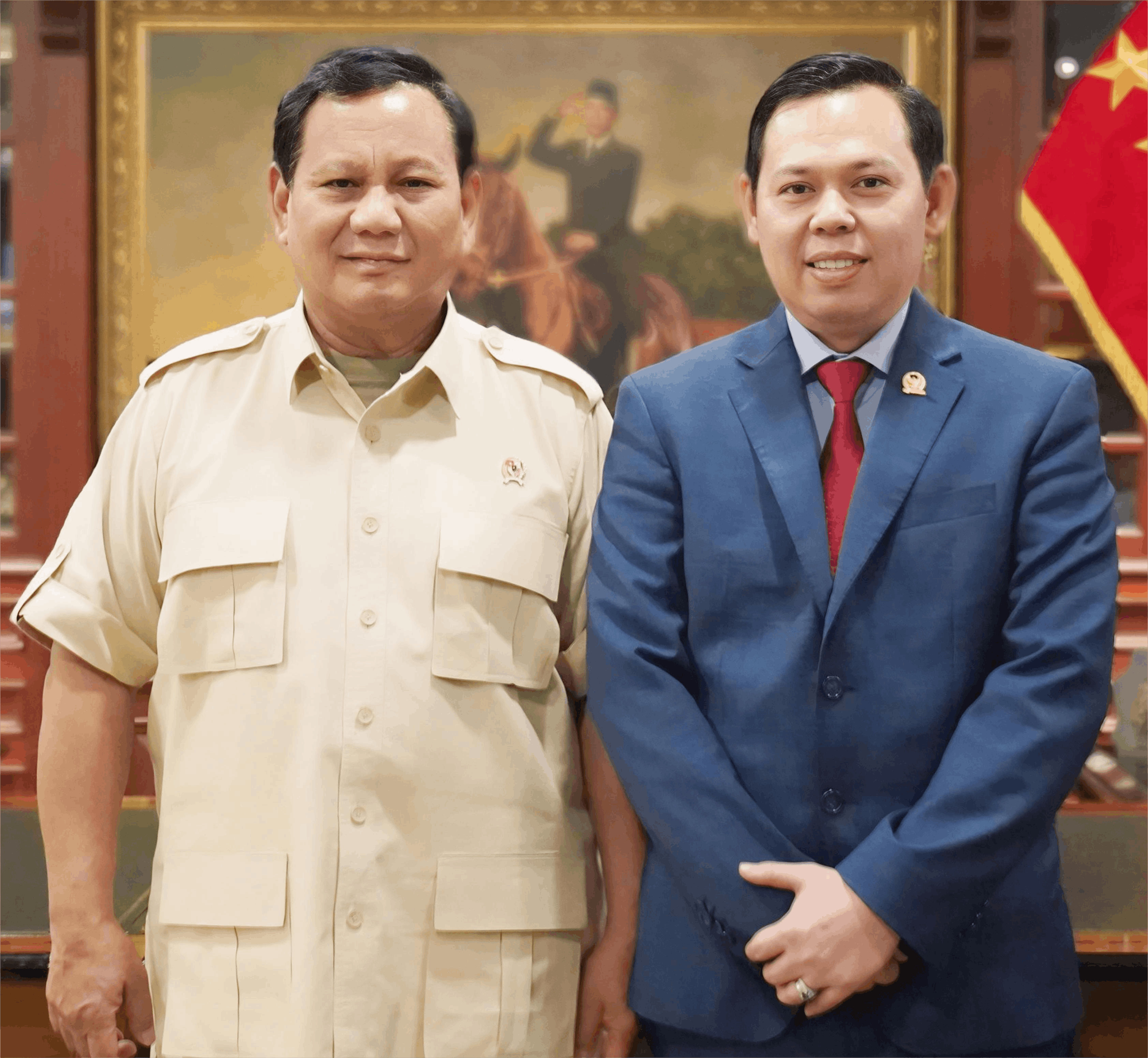
SULTAN BACHTIAR NAJAMUDIN
CHAIRMAN OF REGIONAL REPRESENTATIVE COUNCIL OF THE REPUBLIC OF INDONESIA
GREEN DEMOCRACY:
PLANTING AWARENESS,
PRESERVING CIVILIZATION

On the soil of Anggut, South Bengkulu, on May 11, 1979, a young boy was born who would one day step onto the stage of national leadership — Sultan Bachtiar Najamudin. Raised in a humble family whose life was sustained by the land and the sweat of honest labor, he grew up nurtured by values of integrity, perseverance, and love for his homeland. From the narrow lanes of Bengkulu, his journey began, carrying the spirit of a son of the region who aspired to change destiny—not only for himself, but also for his nation. Today, he serves as the Chairman of the Regional Representative Council of the Republic of Indonesia (DPD RI) for the 2024–2029 term, becoming a symbol of pride for Bengkulu and an inspiration for the younger generation of Indonesia.

 Sultan’s life journey is a story of perseverance and courage in walking a long and demanding path. After completing his early education in Bengkulu, he pursued higher studies at the Faculty of Social and Political Sciences of the University of Indonesia, and later continued his master’s degree at Prof. Dr. Moestopo (Beragama) University. He began building his career through youth movements and organizational leadership, serving as Chairman of the Indonesian National Youth Committee (KNPI) of Bengkulu Province—a starting point that opened the door to his future in politics. From there, his steps grew ever more resolute: elected as a Member of the Regional Representative Council (DPD RI) in 2009, later serving as Vice Governor of Bengkulu (2013–2015), and once again entrusted by the people of Bengkulu as Vice Chairman of the DPD RI for the 2019–2024 term, before ultimately assuming the position of Chairman in 2024. His path reflects a journey of dedication that grew from regional roots to the summit of national leadership.
Yet Sultan is not merely a politician; he is a thinker and a catalyst for larger ideas. Amid the turbulence of political life, he has lit a lantern of awareness through the concept of “Green Democracy”—a vision that connects democratic governance with environmental sustainability and social justice. His ideas transcend discourse, evolving into a moral call to protect the earth and uphold human dignity. Through various social initiatives and empowerment programs, he demonstrates that true power is not measured by position, but by how much benefit one can bring to others.
From Bengkulu for Indonesia, and from Indonesia to the world—Sultan Bachtiar Najamudin continues to write a story of civilization with the ink of service and a green vision that transcends generations.
*****
 Twenty years ago, when the world had not yet been so intensely absorbed in conversations about climate change, a young man from Bengkulu was already looking far into the future. He saw forests not merely as clusters of trees, but as the pulse of life that breathes vitality into humanity. In his mind was firmly planted a conviction: forests must be protected without condemning the people who live around them to poverty.
He is Sultan Bachtiar Najamudin, who now serves as the Chairman of the Regional Representative Council of the Republic of Indonesia (DPD RI). He understood that beneath the lush canopy of protected forests lie deposits of gold and coal—wealth that is tempting, yet at the same time threatening the balance of the earth.

 The dilemma stirred his conscience. He reflected deeply: “If this forest must continue to stand, then the world must also share the burden of protecting it.” From that moment, the seed of ecological awareness began to grow within him.
As Chairman of the Indonesian National Youth Committee (KNPI) in 2005–2006, he brought that idea into the public sphere in an unusual way. He did not choose a political podium—he chose to plant trees. He invited Miss Universe 2006, together with the Puteri Indonesia Foundation, to plant seeds of hope in his homeland.
From Jakarta to Bengkulu, from assembly halls to open fields, they planted trees one by one. It was not merely a symbolic act, but a prayer that humanity might once again reconcile with nature. Documentation of the initiative even traveled as far as Australia, carrying a simple yet profound message: “Do not cut down our trees. Let these forests live, so that humanity may live as well.”
Years passed, and the world changed. The idea he once described as a form of global compensation for those who safeguard forests is now widely known as carbon trade Sultan often smiles when recalling it—an idea born in a small village in Bengkulu that has since become part of the universal language of global diplomacy.
His journey soon stepped onto a larger stage. In 2009, he entered parliament and joined GLOBE — the Global Legislators Organization for a Balanced Environment, the world’s largest parliamentary environmental organization headquartered in London.
 It was there that his voice began to resonate. He spoke no longer solely for Bengkulu, but for all of humanity. In international forums, he raised the issues of REDD+ and carbon trading, attending each Conference of the Parties (COP) while advocating climate justice for tropical countries that serve as the lungs of the earth.
For Sultan B. Najamudin, environmental issues are not merely a political agenda—they are a call of conscience. He believes that safeguarding the earth is as noble as safeguarding life itself. He does not wish humanity to become a species that excels only in taking, yet forgets to give back to the earth that gave it birth.
In every forum, Sultan—who also serves as Chairman of the Advisory Council of Dunia Melayu Dunia Islam (DMDI)—reminds the world that communities living beneath protected forests are not enemies of the environment, but its guardians. They must live and sustain their livelihoods, yet the world demands that they do not cut down even a single tree. Therefore, justice must come in the form of real global compensation.
At COP26 in Glasgow, United Kingdom, his voice once again echoed strongly. He emphasized that global environmental regulations often place an unfair burden on developing nations."We are asked to protect forests and reduce emissions," he said, "yet the world must also recognize the responsibility to support those who safeguard the earth’s natural lungs."


 “But they forget—since the Industrial Revolution, they have been the ones who have enjoyed the greatest benefits from the burning of the earth,” he asserted firmly.
The statement stirred the conference hall. He did not speak in anger, but with sincerity. He was not rejecting change—he was demanding justice. For Indonesia and other tropical nations, forests are not a burden; they are a strength that the world must value and respect.
When discussions of net zero emissions and the green economy became global trends, Sultan had already moved a step further. He spoke not only of mitigation and adaptation, but also of morality. For him, protecting the earth is a spiritual mandate, not merely a development agenda.
From these long experiences emerged a deeper realization within the former Chairman of the Indonesian Young Entrepreneurs Association (HIPMI) of Bengkulu Province: true change requires a strong legal foundation. It was from this conviction that he encouraged the drafting of a Climate Change Bill in the Indonesian Parliament—a bold initiative that had never been proposed before.

“If we are too late,” he warned, “the next generation will no longer have space to breathe.” For him, the bill is not merely a collection of legal articles, but a moral legacy for future generations. He understands that many interests may feel threatened, yet to him the future of the earth is far more valuable than temporary economic comfort.
From long reflection emerged an idea he calls Green Democracy—a concept of democracy that had never before been articulated in such terms anywhere in the world. He explored widely, tracing intellectual traditions and literature, and realized that this idea represents a new step in the evolution of global political thought.
In his view, true democracy does not end with the voice of human beings. It must also create space for nature to “speak.” Nature has the right to live, to breathe, and to be respected. This is the essence of Green Democracy—a harmony between humanity and the earth within a shared system of values.
Green Democracy is not a slogan; it is a paradigm. It demands that every political policy consider its ecological consequences. It invites citizens to become part of the solution, rather than mere spectators to the destruction they will inherit.
This visionary idea has now moved beyond discourse. Sultan B. Najamudin has written and preserved it in a book titled Green Democracy, a work that reflects his intellectual journey while offering a moral compass for future generations.
Through this book, he explains how democracy can grow in harmony with ecological and spiritual balance. He emphasizes that sustainability is not solely a matter of technology, but also of the human soul’s awareness to live in alignment with nature. The book is not merely an academic work—it is an invitation to reflect and to act, from the realm of policy to the sphere of personal consciousness, so that the earth may remain a livable home for generations to come.
Sultan believes that the future of the planet must be built upon collective awareness. Green Democracy is a call to the younger generation to plant, nurture, and protect life. Politics, in his view, must return to cultivating—not destroying.
Just last month, this idea was tested before thousands of environmental activists from around the world. At a major forum attended by figures from the United States, Norway, the Netherlands, and Greenpeace, Sultan spoke not merely as a politician, but as a human being who has witnessed firsthand the fragile balance of nature.
“Developing countries like ours,” he said from the podium, “are constantly confronted with a great dilemma: whether to extract natural resources in order to live, or to preserve nature so that life itself may continue.” The sentence was followed by prolonged applause—not because it was dramatic, but because it was honest.
Sultan also reminded the audience: “Planting a single tree is a form of charity whose reward never ceases.” For him, this statement forms the spiritual foundation of the entire environmental struggle. The earth is a field of virtue, and every leaf that grows is a record of humanity’s love for the Creator.
From this foundation, Green Democracy finds its soul—a form of politics rooted in devotion. A system that places ecological balance alongside social justice. A democracy with a green spirit is not merely about elections; it is a collective awareness to live in harmony with nature.

Now, as he prepares to depart for Brazil to attend COP-30, he is ready to introduce Green Democracy as Indonesia’s idea for the world—a contribution from the tropical lands to global civilization, affirming that politics can grow from compassion and that power can emerge from ecological awareness.
From this concept also arises its natural extension: Green Parliament—a parliament that weighs every law through the lens of sustainability. In such a vision, nature finds its place within political discourse; the earth becomes a subject, not merely an object.
He believes that if humanity can learn to listen to the voice of the forest, politics will rediscover its balance. For when nature is disturbed, the entire order of life is shaken. Politics, economics, and development must therefore return to a principle of balance, rather than be driven by greed.
In the end, Green Democracy is not merely an idea—it is a spiritual journey. It is about how human beings plant awareness within their hearts, just as they plant trees upon the earth. For Sultan B. Najamudin, protecting nature is the most beautiful way to love life itself.
Building the Competitiveness of the National Halal Industry
The Regional Representative Council of the Republic of Indonesia (DPD RI) does not merely stand as a state institution that advocates regional aspirations at the national level. Under the leadership of its Chairman, Sultan B. Najamudin, the institution has emerged as a driver of change rooted in the nation’s strategic interests, particularly through strengthening regional economies. Sultan emphasizes the importance of collaboration between Regionally Owned Enterprises (BUMD) and local business actors to build a competitive national halal industry.

According to him, Indonesia possesses enormous capital to lead the global halal industry. With the largest Muslim population in the world, Indonesia’s domestic market—or captive market—in the halal sector, particularly for halal food products, is vast and highly promising. “Our potential is extraordinary. Our domestic captive market alone is already very strong, not to mention the opportunities for us to go global,” Sultan said during an economic forum discussing the future of Indonesia’s halal industry.
However, this great potential also contains an irony. Despite the high demand for halal products, Indonesia still imports halal products from non-Muslim countries such as China and Australia. Sultan views this as a paradox that must be addressed immediately. “This is our collective homework. With such enormous potential, Indonesia should stand as a production hub, not merely a market for the world’s halal products,” he emphasized.
To address this challenge, Sultan believes regulatory reform is needed—one that better supports domestic halal industry players. In addition, policy synchronization between the central and regional governments is essential so that halal industry development programs can run more effectively. Regionally Owned Enterprises (BUMD) are also seen as playing a crucial role as a bridge between government policies and the needs of local industries and entrepreneurs.
Sultan further encouraged the development of a strong halal ecosystem involving multiple stakeholders, including the Indonesian Ulema Council (MUI) as the halal certification authority, the Indonesian Chamber of Commerce and Industry (Kadin), Islamic financial institutions, universities, and MSME actors. Such collaboration, he said, must be built strategically so that the halal industry does not remain merely a slogan but truly delivers economic benefits to communities across the regions.
“The halal industry is not only about labels—it is about the economic sovereignty of the Muslim community,” concluded Sultan B. Najamudin. He reaffirmed the commitment of the DPD RI to continue facilitating and overseeing policies that strengthen the competitiveness of Indonesia’s halal industry in the global market. Through collective effort, Sultan believes Indonesia will not only compete but can ultimately lead the global halal economy in the future.
SULTAN B. NAJAMUDIN:
A YOUNG STATESMAN
FROM THE LAND OF RAFFLESIA

Sultan Bakhtiar Najamudin—affectionately known as Saba SPN or Bungsu—was born on May 11, 1979, in Bengkulu, the land that also gave birth to Fatmawati Soekarno, the first First Lady of the Republic of Indonesia. From this small yet historically rich city, he grew into a son of the nation with great determination and a far-reaching vision.
Economic hardship in his family did not extinguish his spirit. Instead, from those limitations emerged an extraordinary fighting spirit. At a young age, he left his hometown to seek his fortune in Jakarta—working day and night while pursuing his education until he was eventually accepted at the University of Indonesia. It was on this campus that his worldview and awareness of the meaning of struggle began to take shape.
Since his student days, Sultan had been active in various youth organizations. He embarked on a long journey from activism to the worlds of business and politics. Within him, idealism and pragmatism coexist—two forces that enable him to move across different fields without losing his sense of direction.
His organizational track record is impressive. He has served as Chairman of KNPI, Chairman of KONI, and Chairman of HIPMI, both at the provincial and national levels. These experiences shaped him into a young leader with broad insight—an inspiring orator, a resilient entrepreneur, and a politician firmly grounded in values.
His political career began in 2009, when he was elected as a DPD RI Senator representing Bengkulu at the age of 30—an age when many people are just beginning their journeys, yet for Sultan it had already become a calling for public service. Four years later, he was entrusted to serve as Vice Governor of Bengkulu (2013–2015) before eventually returning to Senayan to carry out his mandate as Deputy Chairman of the DPD RI (2019–2024), and later being elected as Chairman of the DPD RI, making him one of the youngest leaders in the history of this high state institution.
His political career has been marked by integrity and bold ideas. He does not merely aspire to be a public official, but to become a thinker of the nation. This vision has earned him numerous prestigious awards, including the Best Parliamentary Award, Critical and Pro-Democracy Award, Senator Award Bintang Mahaputra Naraya, Excellence in Empowering Local Representatives for Equality, and the Bintang Republik Indonesia Utama—the nation’s highest honor for extraordinary service.
 However, Sultan’s journey is not merely a story of politics. The world of business has also become a field of his service. He started from the bottom—working as a mechanic, running small-scale trading ventures, and eventually building businesses in the defense, mining, and MSME empowerment sectors. Through Smash Hub Indonesia, he has opened access and opportunities for young people to innovate and achieve economic independence.
His awareness of the importance of education and global competitiveness led to the establishment of Indonesian Democracy and Education (IDE)—a platform that equips Indonesian youth with critical thinking, democratic spirit, and a national outlook that remains open to the world. For Sultan, a great nation is one that dares to think independently, not merely follow the currents of the times.
At the international level, Sultan is also known for his active involvement in Globe International, a global parliamentary forum focusing on climate change and environmental balance. He is frequently invited as a speaker and advisor to various ambassadors in Indonesia, advocating for Indonesia’s role as a tropical nation with a strategic position in safeguarding the sustainability of the planet.
As a son of the region, he has never forgotten his roots. He continues to encourage youth empowerment and strengthen local economies through the UMKM Sultan program, which aims to bring regional flagship products to national and international markets. He also runs the social initiative “Sultan Berbagi” (Sultan Shares), a humanitarian movement that helps underprivileged communities through charitable activities and empowerment programs, which he initiated during his first term in the DPD RI.
Today, Sultan’s steps extend further into the realm of ideas. He has introduced a major concept called Green Democracy—a form of democracy grounded in harmony between humanity and nature. It is a vision of a more civilized political future, where development no longer suppresses the environment but instead nurtures life.