
WORLD MOSQUE YOUTH
From Papua for Civilization

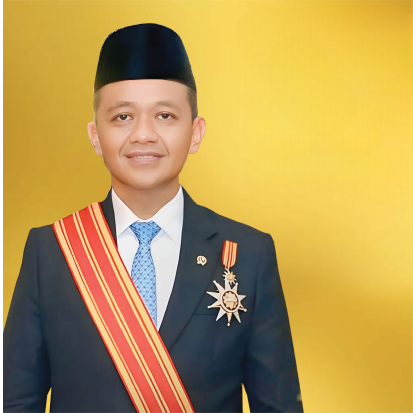
 Amid the roar of the modern world that often forgets its spiritual roots, there emerges a figure who serves as a bridge between the worlds of business, politics, and Islam — Bahlil Lahadalia. When he was appointed Chairman of the Advisory Council of the World Mosque Youth, it felt as though the world was witnessing the culmination of his entire life journey — from a small mosque in Papua to a global forum that brings together Muslim youth from across continents.
Bahlil is not merely a public figure, but also a reflection of the hopes and perseverance of a nation’s sons who rise from humble beginnings, gradually moving from simplicity toward great responsibility on the world stage.
His face reflects the face of Indonesia: firm, warm, and full of spirit. Within him resides a belief that success is not the privilege of a few, but belongs to anyone willing to struggle with sincere intention. From the land of Fak-Fak, Papua — a land known as one furnace, three stones, where the values of tolerance grow in the same air as prayer — Bahlil began everything.
From a young age, he understood that life is not merely about pursuing luxury, but about creating benefit for others. The Islamic values he learned from his parents were not symbolic Islam, but substantive Islam — an Islam that lives through action, not merely appearance.
He grew up with the spirit of hard work, honesty, and perseverance. For Bahlil, faith is not enough to be spoken; it must be manifested through deeds and dedication. While many struggle to pursue positions, Bahlil chose instead to prepare himself through service.
He learned that power without sincerity is emptiness, and wealth without blessing is merely a burden. Therefore, when great responsibilities came — from the world of business to politics — he accepted them with the intention of turning them into acts of devotion.
In every step he takes, Bahlil — who also serves as Chairman of Partai Golkar, one of Indonesia’s largest political parties — carries the spirit of communication and collaboration. He is able to speak in the language of ordinary people, yet also engage in sharp and thoughtful discussions with world leaders.

Bahlil Lahadalia’s journey in the worlds of entrepreneurship and politics is the story of a son of the nation who crossed boundaries through determination and hard work. Beginning with his struggles as a young entrepreneur in Papua, Bahlil climbed the ladder of success with the belief that courage is the key to change. His path brought him into the ranks of the Indonesian Young Entrepreneurs Association (HIPMI), a platform that introduced him to national business leaders — including a figure who would later become the President of the Republic of Indonesia, Joko Widodo. It was there that the spark of his leadership began to ignite, blending entrepreneurial spirit with a national vision.
The peak of his role in HIPMI came in 2015, when he was elected Chairman of HIPMI. He was not only the leader of the organization, but also a symbol of the rise of young people from Eastern Indonesia. From the land of Papua, he carried a contagious spirit of hard work — inspiring thousands of young entrepreneurs to dare to dream and break boundaries. During his four-year leadership, Bahlil transformed HIPMI into a space for cross-regional collaboration, where every entrepreneur, regardless of origin, could play a role in building the nation’s economy.
When, in October 2019, President Jokowi called upon him to take on the mandate as Head of the Investment Coordinating Board (BKPM) — which later evolved into the Ministry of Investment — destiny seemed to reaffirm the direction of his life’s path. From a regional entrepreneur, he rose to become the guardian of Indonesia’s national investment gateway, ensuring that the country’s business climate grew in a fair and inclusive manner. In his hands, economic diplomacy was no longer merely a matter of numbers, but a bridge between opportunity, hope, and the future of the nation. Now, the name Bahlil represents not only individual success, but also the spirit of Indonesia rising from the margins to lead at the center of civilization.
 Behind his role as the current Minister of Energy and Mineral Resources and a political leader, Bahlil is also known as a generous figure — one who helps without expecting anything in return and gives without seeking recognition. Mosques across remote parts of the country, from Papua to Sumatra, have often received his quiet assistance.
He once told mosque administrators, “There is no need to announce it in the media; let Allah be the one who knows.” said Bahlil, who also served as the former Chairman of the Central Executive Board of the Indonesian Young Entrepreneurs Association (HIPMI).
For him, amal jariyah (continuous charity) is not a stage for display, but a quiet path toward divine blessing. He has also extended assistance to the people of Palestine, the Rohingya, and Muslim communities in Southern Thailand. 
These actions are not merely expressions of sympathy, but manifestations of the responsibility of a Muslim who understands the meaning of ukhuwah — brotherhood that transcends geographical boundaries.
When Bahlil Lahadalia was appointed Chairman of the Advisory Council of the World Mosque Youth, alongside the 8th President of Singapore, Puan Halimah Yacob, the President of Dunia Melayu Dunia Islam (DMDI), Tun Seri Setia Mohd Ali bin Mohd Rustam, and Datuk Ostman, Minister of Cambodia, it seemed as though destiny was weaving the long story of his life into a single, meaningful tapestry. From the small mosque in Papua — where his youthful steps once bowed in sincere prayer — he now stands before a global forum that will bring together thousands of Muslim youths from across continents. That journey feels like a straight line stretching from the eastern edge of the Indonesian archipelago toward the horizon of the world — a story of faith growing alongside hard work, and of prayers that transcend the boundaries of space and time.

The position is not merely a symbolic honor, but a recognition of the sincerity and real work he has devoted over many years. He did not emerge from the luxurious halls of power, but from the corridors of life filled with struggle — from sweat, honesty, and the courage to remain steadfast when the world offers shortcuts. Thus, when his name is mentioned among the leaders of the Islamic world, what appears is not only the figure of Bahlil himself, but also the spirit of millions of Indonesian youths who believe that great change can arise from faith and hard work.
Now, in the hands of a son of Papua who once sold cakes simply to make a living, that great responsibility finds its meaning. He does not speak about power, but about service; he does not chase popularity, but seeks to build civilization. Behind the calm gaze in his eyes lies a conviction that the future of Islam will not be built solely from pulpits and scriptures, but also from courageous hearts, working hands, and souls that remain devoted and humble before Allah SWT.
Under his guidance, the organization does not merely discuss religious matters, but also empowers the economic potential of the Muslim community, strengthens education, and nurtures the spirit of universal humanity. 
During various regional visits of Partai Golkar, Bahlil never forgets to stop by Islamic boarding schools, converse with religious scholars, or meet leaders from different faiths. “I believe that a great Indonesia must stand upon the values of togetherness,” Bahlil once said. His support for the program to clean 444 thousand houses of worship symbolizes that, for him, faith is compassion — and compassion must embrace everyone.
Now, as his name echoes in international forums, Bahlil continues to walk a simple path: the path of those who work quietly yet leave lasting footprints. He is not only a leader, but also a planter of values. From Papua, from the mosque, from a sincere heart — he stands to remind the world that true strength is born from faith, sincerity, and tireless work.