
DMDI SOUTH SULAWESI
BUGIS–MALAY FOOTPRINTS: FROM MELAKA TO THE FUTURE
SAFEGUARDING HERITAGE FROM
THE HORIZON OF SOUTH SULAWESI

On the land of South Sulawesi, history murmurs like the sea breeze that never ceases to blow; carrying the stories of the Bugis royal descendants who once sailed to Melaka, upholding Siri’ na Pacce as the banner of honor. Their traces are not merely legends, but knots that connect the Bugis and Malays within a single pulse of civilization. From ancient ports to the spaces of the digital age, that heritage still lives, transforming into a bridge of brotherhood, a strength of culture, and the light of Islam that guides the steps of generations.
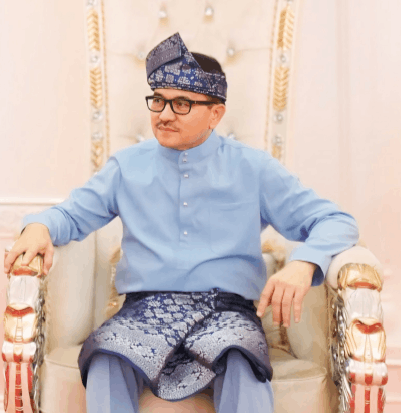
History preserves many stories of brotherhood. One of them is when the Bugis royal sons were summoned by the Sultan of Melaka to defend the city from Portuguese attacks. This event was not merely a record, but a symbol of a bond born from conscience. For the Bugis people, this calling was a moral mandate rooted in siri’ na pacce—honor and solidarity that time cannot erode. The following is an excerpt from the interview of DMDI Magazine with the Chairman of DMDI South Sulawesi, Datuk Dr. H. Jufri Rahman, M.Si.
History records that the sons of Bugis kings were once summoned by the Sultan of Melaka to help defend the city from the Portuguese attack. How does Datuk view this historical legacy as the foundation of Bugis–Malay cultural connectivity until today?
History records that the event was not merely a military fragment, but a reflection of the political, social, and cultural networks that had long been rooted between the Bugis and the centers of Malay power. The presence of Bugis nobles in Malacca teaches two things: first, how political and cultural solidarity can transcend the boundaries of kingdoms in facing external threats; second, how the ties between the Bugis and the Malays were woven within broader interactions—through trade, political marriages, and cultural exchanges that created harmony.
From a cultural perspective, this legacy becomes the foundation for the birth of a shared identity that endures through time. The value of siri’ in Bugis tradition, which emphasizes courage and dignity, merges with marwah in Malay tradition, forming an interwoven system of values in both social and political realms. The Bugis diaspora spread across the Malay Peninsula and surrounding islands not only absorbed Malay culture, but also made major contributions in enlivening cultural life and strengthening political structures in overseas lands.
Thus, the Bugis involvement in defending Malacca from the Portuguese can be seen as an early symbol of the emergence of a “shared cultural space” between the Bugis and the Malays. This space did not end as a historical record but continues to live until today—in language, customs, and social practices that unite both, and in contemporary Southeast Asian politics that still reflects echoes of past unity.
After the gates of the city of Malacca were opened and the Sultan of Malacca retreated to Muar, the role of the Bugis became increasingly prominent throughout the Nusantara region. How does DMDI South Sulawesi interpret the continuity of this history in building the identity and solidarity of the Malay World and the Islamic World?
After the gates of Malacca were opened and the Sultan retreated to Muar, the political and trade dynamics in the Nusantara region entered a new phase. The role of the Bugis as sailors, traders, and heirs of maritime traditions became increasingly prominent in the geopolitical and socio-cultural dynamics of the region. Their mobility to various regions—from the Malay Peninsula, Kalimantan, to the eastern archipelagos of Nusantara—not only reinforced the position of the Bugis as a maritime diaspora but also as agents of the spread of culture, language, and Islamic values.
In this context, Dunia Melayu Dunia Islam (DMDI) South Sulawesi interprets this historical continuity as a cultural and spiritual foundation for building shared identity and solidarity. First, from a historical perspective, the Bugis mobility after the fall of Malacca is understood as continuity, namely the continuation of the struggle of the Malay-Islamic community in facing colonial hegemony while safeguarding maritime sovereignty. Second, from an identity perspective, DMDI positions the experience of the Bugis diaspora as historical capital to reconnect the collective memory of the Malay-Islamic world in various regions. This provides cultural legitimacy that the Bugis are not merely local actors but an integral part of the network of Malay civilization.
Meanwhile, from the perspective of solidarity, DMDI South Sulawesi uses the history of the Bugis diaspora as a binding narrative. Solidarity is built not only on ethnicity but also on Islam as a universal value that transcends geopolitical boundaries. In this way, DMDI seeks to project a Malay-Islamic identity rooted in history yet relevant to contemporary challenges—such as globalization, identity fragmentation, and the need for unity among the Muslim community.
Thus, the interpretation of history by DMDI South Sulawesi shows that the continuity from the post-fall of Malacca era to the Bugis expansion across the Nusantara does not stop at a romantic narrative of the past but is revived as cultural energy to strengthen identity building and solidarity making within the framework of the contemporary Malay World and Islamic World.
The Bugis are known as resilient sailors, skilled diplomats, and brave warriors. How can these historical values and characteristics continue to live within the Bugis-Malay cultural sphere of South Sulawesi amid the currents of globalization?
In answering this question, several aspects need to be considered:
First, the historical dimension, the legacy of maritime tradition and diplomacy. The long history of Bugis voyages and diaspora since the 17th century shows that maritime mobility was not only an economic activity but also a political and cultural strategy. Bugis diplomacy in the Malay Peninsula, Kalimantan, and other islands formed alliance networks that connected Bugis identity with Malay-Islamic culture. These values can continue to live through the reconstruction of historical memory, for example through local education, the writing of maritime history, and diaspora commemorations so that new generations understand the Bugis not merely as an “ethnic group” but as actors of Nusantara civilization.
Second, the cultural dimension, namely the ethos and character of the Bugis. Bugis character is supported by the values of siri’ na pacce (honor and solidarity), courage (warani), and strategic intelligence in social relations. In the context of globalization, these values can become cultural capital to build competitive advantages, such as: 1) Siri’ fosters a work ethic and integrity; 2) Pacce strengthens community solidarity in the era of migration and diaspora; 3) Warani encourages courage in facing new challenges in the global economy. Thus, Bugis wisdom is not merely nostalgia but can be adapted into leadership values, business ethics, and socio-cultural resilience.

Third, the sociological dimension, namely the Bugis-Malay world within globalization. Globalization presents a paradox: opportunities for economic and technological integration, but also risks of cultural homogenization. To ensure that Bugis-Malay values remain alive, mechanisms of cultural hybridity are needed—capable of combining traditional values with modern dynamics. For example:
a. Strengthening Bugis-Malay diaspora networks in Southeast Asia through cultural and economic forums.
b. Implementing cultural diplomacy by revitalizing arts, maritime traditions, and seafaring rituals as collective identities.
c. Integrating Bugis-Malay values into the creative economy, culture-based tourism, and multicultural education.
According to your view, what is the greatest challenge faced by Bugis-Malay culture in South Sulawesi in maintaining its identity, especially amid ethnic and cultural diversity?
Several dimensions must be considered to answer this question: First, the structural dimension, which includes modernization and urbanization. Modernization and urbanization in South Sulawesi have significantly transformed the socio-cultural landscape. Migration from villages to cities, the growth of commercial centers, and the opening of global economic mobility have made Bugis-Malay communities interact more intensively with other ethnic groups. In this context, the greatest challenge is how to preserve language, traditional symbols, and value systems so that they are not marginalized by national languages, global languages, or modern urban lifestyles.
Second, the cultural dimension, namely identity negotiation. Bugis-Malay culture possesses noble values such as siri’ na pacce (Bugis) and Malay solidarity rooted in Islam. However, within the context of ethnic diversity (Makassar, Toraja, Mandar, and other migrant communities), there is a need to negotiate with other identities without losing the core of their own culture. The challenge lies in building an inclusive identity that preserves Bugis-Malay characteristics without becoming exclusive to the point of creating social distance.
Third, the dimension of globalization and cultural homogenization. The influence of globalization, social media, and global popular culture creates what is known as cultural homogenization—a shift from tradition-based values to consumption-based values. The younger generation of Bugis-Malay communities faces the risk of cultural detachment, where traditional values, historical narratives, and local knowledge become increasingly disconnected from everyday life. The challenge here is to build historical awareness and cultural identity that remain relevant for millennials and Gen Z so they see Bugis-Malay not merely as a “heritage of the past,” but as a living identity that contributes to the future.

Thus, the greatest challenge for Bugis–Malay culture in South Sulawesi is not merely preserving traditions formally, but translating that cultural identity within the context of modernity and diversity. This requires adaptive cultural strategies—maintaining core values (language, customs, maritime ethos, Islamic solidarity) while opening oneself to cross-cultural dialogue and social change.
To what extent can the role of Islam, which from the beginning has been the spirit of Bugis–Malay culture, enrich cultural expression and strengthen the identity of the people in South Sulawesi?
There are several aspects that must be considered in answering this question:
First, the historical dimension. Islam has been present in South Sulawesi since the 17th century and was soon adopted by major kingdoms such as Gowa-Tallo, Bone, and Wajo. Islam was not only understood as a ritual religion, but also as a cultural framework that integrates local value systems with universal teachings. This process of Islamization produced a form of cultural syncretism, in which Bugis–Malay traditions that were locally cosmological were transformed through sharia values without losing their ethnic identity.
Second, the cultural dimension. Islam enriches Bugis–Malay cultural expression through integration in the arts, literature, customary law, and oral traditions. Islamic concepts such as amar ma’ruf nahi munkar, ukhuwah, and amanah are translated into local philosophies, for example siri’ na pacce (honor and solidarity) in Bugis culture, or the Malay principle adat bersendi syarak, syarak bersendi Kitabullah. Here it can be seen that Islam is not merely a normative doctrine, but a source of cultural creativity that animates the life of society.
Third, the social and identity dimension. Islam becomes the adhesive of identity between Bugis communities in South Sulawesi and Malay communities in the Peninsula. The solidarity that arises from a religious basis strengthens the imagined community of the Malay Islamic World, where the Bugis diaspora is accepted as part of Malay society. Thus, Bugis identity in overseas lands cannot be separated from the “Islamic label” that reinforces its social and political legitimacy.
From this perspective, Islam still plays a role as a symbolic resource in strengthening the identity of the people of South Sulawesi. Religious rituals, Islamic education, and an economy based on sharia values provide new spaces of expression for Bugis–Malay communities to face the challenges of globalization without losing their traditional roots. This shows that Islam functions in a dual role: as a cultural heritage that enlivens cultural expression, and at the same time as an identity marker that strengthens the position of Bugis–Malay communities in both national and transnational contexts.
Islam has been and continues to be the spirit of Bugis–Malay culture in South Sulawesi. Its role not only enriches local cultural expression but also strengthens collective identity through the integration of universal Islamic values with local wisdom. In this context, Islam can be viewed as a form of cultural capital that enables Bugis–Malay communities to preserve the continuity of tradition while adapting to modernity.
****
 Under the sky of South Sulawesi, rich with history and the traces of Bugis–Malay civilization, the Chairman of Dunia Melayu Dunia Islam (DMDI), Datuk Dr. H. Jufri Rahman, M.Si., ignites a torch of vision for DMDI: an organization that does not merely stand as a guardian of heritage, but also as a social, economic, and intellectual force rooted in Malay–Islamic values. With the spirit of “shared heroes” inherited from the ancestors, he envisions DMDI as a bridge of cross-national collaboration, a policy think tank, and a digital lighthouse guiding the younger generation.
In his view, modernization must not seize identity, but rather become a field in which Siri’ na Pacce grows as a moral spirit. From Makassar to Mindanao, from Johor to Singapore, he envisions DMDI South Sulawesi emerging as a new axis of civilization—a force that does not merely remember the past, but prepares a dignified and enlightened future.
How can Bugis–Malay culture in South Sulawesi remain relevant and contribute to the social, economic, and spiritual landscape of society today?
The opportunities for Bugis–Malay culture in South Sulawesi to remain relevant and contribute to today’s social, economic, and spiritual landscape can be understood through three major dimensions.
First, the social landscape, which can be seen through several aspects such as the revitalization of identity and community cohesion. In this regard, several points require attention: 1) Bugis–Malay culture possesses a strong social foundation, such as the philosophy of siri’ na pacce (honor and solidarity), which builds moral ethos and social cohesion; 2) In an era of identity fragmentation caused by globalization, these values become social capital to strengthen networks of solidarity, improve inter-community relations, and foster togetherness amid diversity; 3) Through the revitalization of customs, language, and oral traditions, Bugis–Malay culture can serve as a local identity anchor aligned with Indonesia’s multicultural vision.
Second, the economic landscape based on the creative economy and maritime diaspora can be identified as follows: 1) Bugis–Malay history affirms an identity as sailors, traders, and a maritime diaspora. This entrepreneurial spirit can be modernized through the development of culture-based creative industries such as traditional crafts, culinary heritage, ethnic fashion, and cultural and maritime tourism; 2) Bugis diaspora networks spread across Malaysia, Singapore, Brunei, and Kalimantan can be utilized as transnational economic capital, opening opportunities for cross-border collaboration rooted in shared cultural identity; 3) With this strategy, Bugis–Malay culture becomes not only symbolic but also productive in supporting the welfare of society.
 Third, the spiritual landscape where Islam serves as the spirit of culture. Several aspects must be considered: from the beginning Islam has been the spirit of Bugis–Malay culture. The integration of Islamic values with local customs has produced distinctive religious expressions such as traditional maulid celebrations, barzanji recitations, and customary legal practices that are harmonized with sharia.
Within the contemporary spiritual landscape, this heritage can strengthen social ethics, nurture public spirituality, and serve as a moral foundation in facing the crises of modernity (materialism and individualism). Thus, Bugis–Malay Islamic spirituality can function as a cultural compass that maintains balance between modernization and the preservation of noble values.
Are there specific strategies or programs implemented by DMDI South Sulawesi to ensure that this historical and cultural heritage remains alive through education, arts, research, and cross-generational social activities?
There are several strategies carried out by Dunia Melayu Dunia Islam (DMDI) South Sulawesi to ensure that the historical and cultural heritage of the Bugis–Malay remains alive across generations. These strategies can be mapped into four main domains: education, arts, research, and social activities.
First, the educational domain. Several actions can be undertaken: 1) DMDI encourages heritage education programs, integrating Bugis–Malay history into local curriculum content, academic seminars, and cross-campus discussions; 2) Strengthening historical literacy through the publication of books, modules, and popular texts based on Lontaraq manuscripts and classical Malay literature; 3) Providing scholarships or academic support for students researching the Bugis–Malay diaspora both in South Sulawesi and Southeast Asia.
Second, the arts and cultural domain: 1) Organizing periodic Bugis–Malay cultural festivals featuring dance, traditional music, and theatre integrated with Islamic values; 2) Revitalizing oral literature and ancient manuscripts such as Sureq Galigo and Malay hikayat so they can be accessed by younger generations through digitalization; 3) Supporting local artists in developing creative expressions based on cultural heritage so that the heritage does not remain static tradition but becomes a source of contemporary innovation.
Third, the research and documentation domain serves as a pillar in strengthening Bugis–Malay collective memory. This can be realized through establishing study centers in South Sulawesi universities connected with institutions in Malaysia, Brunei, and Singapore; conducting comparative research on the Bugis diaspora in the Peninsula and its contribution to Malay-Islamic identity; and supporting digital archiving of manuscripts, records, and historical documents.

Fourth, the social and cross-generational domain requires attention through programs capable of bridging the past, present, and future. These include organizing intergenerational dialogues that bring together traditional leaders, academics, scholars, and youth to discuss cultural values and contemporary challenges; implementing Southeast Asian Bugis–Malay youth exchange programs to build collective awareness that they are part of the Dunia Melayu Dunia Islam network; and mobilizing social activities based on cultural values—such as gotong royong, religious study gatherings (pengajian), and environmental preservation—to reaffirm Islamic values as the spiritual foundation of Bugis–Malay culture.
According to you, how will the face of Bugis–Malay culture in South Sulawesi develop in the next 20–30 years amid rapid technological and global cultural change?
Bugis–Malay culture has never been static; rather, it continually experiences resilience (endurance) and adaptation in line with the dynamics of the times. There are several points that should be noted:
First, the continuity of local identity. Fundamental values such as siri’ na pacce (honor and solidarity), a strong work ethic, diaspora networks, and Islam as the spirit of culture will continue to endure. These values are deeply rooted in collective memory and will remain a cultural compass even in the face of the pressures of globalization. In other words, the Bugis–Malay community will continue to define itself through a local identity intertwined with an Islamic identity.
Second, the transformation of cultural expression. Digital technology will influence how culture is presented, transmitted, and consumed. Oral traditions, lontaraq manuscripts, music, and performing arts will increasingly be documented and developed through digital platforms, whether in the form of online archives, documentary films, or creative content on social media. This opens the possibility of cultural hybridization, in which Bugis–Malay expressions will interact with global culture while still maintaining their distinctive local character.
Third, the dynamics of diaspora and transnational networks. The Bugis are known as a community of migrants. In the next 20–30 years, the Bugis–Malay diaspora across the Nusantara and Southeast Asia will grow stronger, not only as economic networks but also as agents of cultural diplomacy. The Bugis–Malay identity will increasingly be articulated within the framework of Dunia Melayu Dunia Islam, reinforcing the position of South Sulawesi as a center of maritime culture and Islamic civilization in the Malay world.
Fourth, the challenges and negotiations of globalization. The rapid flow of globalization brings the risk of cultural homogenization, particularly through the consumption of popular media, urbanization, and global lifestyles. However, on the other hand, it also provides opportunities for Bugis–Malay culture to negotiate its identity. These challenges will give rise to cultural negotiation, in which younger generations of Bugis–Malay people adopt global technology while striving to embed local values in their daily practices.
Fifth, the prospect of culture as social and economic capital. From the perspective of the next 20–30 years, Bugis–Malay culture will not only be understood as heritage but also as a form of creative economic capital. Cultural festivals, culinary traditions, performing arts, and narratives of maritime history can be packaged as tourism resources and creative industries with global competitiveness. Thus, the face of Bugis–Malay culture will increasingly serve a dual function: preserving identity while simultaneously becoming an asset for development.
History has shown how close the relationship between the Bugis and Melaka and the surrounding regions has been. How can cooperation between South Sulawesi and countries in the Malay Peninsula, as well as other regional areas, strengthen the Malay cultural network so that it remains a pillar of shared identity within the Dunia Melayu Dunia Islam?
History has proven that the relationship between the Bugis and Melaka and its surrounding regions is not a temporary bond, but rather a continuous social, political, economic, and cultural connection. The Bugis diaspora, spread across Johor, Riau, Selangor, Kedah, and even as far as Pattani and Brunei, forms important nodes within the mosaic of the civilization of the Dunia Melayu Dunia Islam. From these nodes emerges a vast network that reinforces solidarity, enables intergenerational interaction, and enriches a shared identity that transcends geographical boundaries.
The historical dimension becomes the first gateway to understanding this bond. The collective memory (historical memory) of the Bugis role in Malay politics and culture deserves to be continuously reconstructed. International seminars, the publication of Lontaraq manuscripts, and renewed exploration of the history of Bugis kingdoms in the Peninsula will reaffirm that Bugis contributions are an integral part of Malay–Islamic civilization. This memory is not merely nostalgia, but a solid foundation that strengthens collective identity.
Next, the cultural dimension emerges as the lifeblood that sustains the network. Language, arts, and traditions rooted in Islam can become spaces of exchange that nurture togetherness. Bugis–Malay cultural festivals, the revitalization of the Lontaraq and Jawi scripts, and the preservation of oral literature will enrich cultural expressions while reaffirming that Islam is the spirit that unites them. From this arises the awareness that heritage is not only meant to be remembered, but to be revived in tangible forms.
The educational dimension opens the path for building a new generation that is conscious of its cultural roots. Collaboration between universities in South Sulawesi and institutions in Malaysia, Brunei, and Singapore can produce joint research on Islamization, customary law, and the dynamics of diaspora communities. Through such academic initiatives, a generation will emerge that is not only intellectually capable but also firmly grounded in the Bugis–Malay identity that shapes their character.
Meanwhile, the socio-economic dimension is inseparable from the cultural network. South Sulawesi, with its maritime potential, marine resources, and cultural products, holds vast opportunities for partnership in halal trade, historical tourism, and tradition-based creative economies. Such collaboration transforms culture from merely symbolic heritage into a sustainable economic resource, bringing together identity and tangible prosperity for communities of shared heritage.
Ultimately, all these dimensions culminate in regional solidarity. Amid the currents of globalization that often homogenize identities, cross-national Bugis–Malay cooperation becomes a strategic instrument for safeguarding the pillars of civilization. This solidarity demonstrates that Islamic values and Malay traditions are not only capable of adapting to change but also continue to radiate their authenticity. From Bugis to Malay, from Sulawesi to the Peninsula, this bond reaffirms the Dunia Melayu Dunia Islam as a shared civilizational home.