
DMDI NORTH SUMATRA
MALAY IN NORTH SUMATRA:
IDENTITY, HARMONY,
AND THE PATH TO THE FUTURE

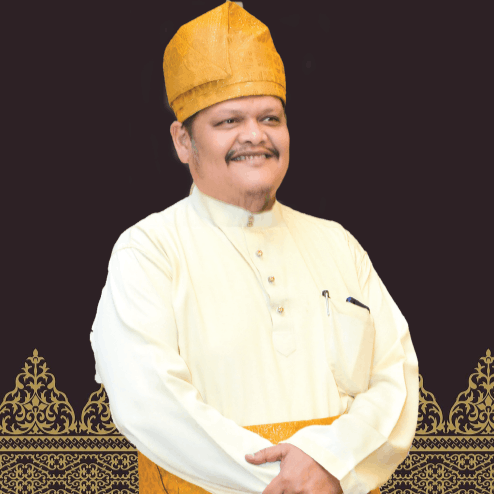
 “For us at DMDI, Malay culture is not merely a memory of history, but a living identity that must continue to be preserved,” said Dr. Muhammad Isa Indrawan, SE., MM., Chairman of the Dunia Melayu Dunia Islam (DMDI) of North Sumatra. For him, amid the rapid currents of globalization, Malay culture is a moral harbor where Islamic values take root and flourish. North Sumatra, with all its diversity, becomes a vast stage where Malay culture stands as an inclusive cultural umbrella—embracing differences without losing its identity.
Modernization is not viewed as a threat, but as an opportunity to introduce Malay culture through education, technology, and digital media. However, Isa also reminds us that the younger generation is often more familiar with global popular culture than with their ancestral traditions. This challenge becomes a major task ahead—how Malay culture can remain adaptable to the times while not becoming uprooted from its foundations, even as limited documentation, weak regeneration, and insufficient supportive policies remain obstacles that must be overcome.
Yet Dr. Isa does not ignore these challenges. “Our younger generation is more familiar with global popular culture than with their ancestral traditions,” he said. This concern also represents a significant responsibility. On the one hand, Malay culture must be able to adapt to changing times; on the other, it must not lose its roots. The lack of documentation, limited regeneration, and weak policy support remain thorns in the effort to preserve it.
 Thus, balance is the key—being open to the world while remaining firmly grounded in one’s own land. Embracing the winds of modernity while remaining rooted in traditional values. “A living Malay culture is one that is flexible, yet unbroken,” he emphasized.
From DMDI’s perspective, it is Islam that gives soul to Malay culture. “The old saying ‘Malay is Islam, and Islam is Malay’ still feels relevant. Islam enriches cultural expression, gives depth of meaning, and protects us from becoming merely empty aesthetics,” explained Dr. Isa. From the arts and wedding customs to architecture, Islamic values breathe life into them, providing both color and direction, said Dr. Isa, who is also the Rector of Universitas Pembangunan Panca Budi, North Sumatra.
More broadly, Islam serves as a moral fortress so that the Malay community is not swept away by the tides of globalization. “With a religious, inclusive, yet modern identity, Malay culture is believed to present a balanced face—open, yet principled,” Dr. Isa elaborated.
“The opportunities for Malay culture in North Sumatra are immense,” Dr. Isa said with confidence. Socially, its values—emphasizing courtesy, deliberation, and mutual cooperation—can serve as a bond of harmony. Economically, it can foster tourism, culinary industries, and creative economies with commercial value. Spiritually, the Islamic values embedded within it provide a strong and enduring foundation.
To that end, DMDI encourages concrete programs. In the field of education, it is necessary to incorporate local Malay cultural content into the curriculum, establish research centers, and provide literary training for the younger generation. In the arts sector, regular festivals, the regeneration of artists, and the digitization of manuscripts are needed. In the social sphere, strengthening traditional institutions, reviving the tradition of communal feasts (kenduri), and fostering interethnic cooperation are essential.
“This strategy is not merely about preservation,” said Dr. Isa, “but about development so that Malay culture remains relevant to the economic, spiritual, and social life of our society.” He believes that without innovation, culture becomes merely an artifact. But with innovation, it can become an energy for development.
When asked about the face of Malay culture in the future, Dr. Isa smiled. “Twenty or thirty years from now, this culture will be more adaptive, more digital, yet still rooted.” He envisions Malay oral traditions, music, and dance documented in digital formats—accessible on YouTube, applications, and even international platforms. The younger generation will no longer need to be physically present on a stage to learn, because that heritage will live in the palm of their hands.
However, this sustainability greatly depends on cross-sector support. Government, academics, traditional institutions, and society must work in synergy. “If there is a shared commitment, Malay culture will not only survive, but will emerge as a dynamic, Islamic, and inclusive culture,” he said.
Not only locally, DMDI also views regional cooperation as essential. Cultural exchanges with Malaysia, Singapore, Brunei, and Southern Thailand can strengthen a transnational identity. “Through joint festivals, academic research, and halal tourism, Malay culture can become a pillar of global identity,” Dr. Isa concluded. It is a vision that places Malay culture not merely as a heritage, but as a future.

Asia’s Strategic Agenda
“The most urgent strategic agenda for DMDI,” said Dr. Isa, “is ensuring that we remain relevant and capable of standing as a respected organization in the Asian region.” For him, DMDI must not merely become a vessel of cultural nostalgia, but a strategic actor that contributes meaningfully in the social, economic, and spiritual spheres.
The first step is strengthening identity and values. DMDI must affirm itself as the great house of an inclusive and moderate Malay-Islamic community. “We must become a moral reference,” Dr. Isa said, “an organization that unites rather than divides—one that embraces rather than judges.” In this vision, Malay-Islam stands as a face of harmony amid the diversity of Southeast Asia.
Dr. Isa added that cultural diplomacy becomes the second pillar. According to him, DMDI must be present in regional forums, building synergy with governments, universities, and cross-border communities. Through cultural festivals, academic cooperation, and creative economy initiatives, Malay culture can be promoted as a living transnational identity that brings tangible benefits.
The digital era also demands transformation. “If we want to reach the younger generation, digital platforms are the answer,” he explained. Social media, knowledge portals, and shared cultural applications will become new spaces where Malay-Islamic values are disseminated. With this, DMDI will no longer be limited to seminars or conventions, but will exist within the reach of young people’s hands.
The fourth agenda is economic and educational empowerment. DMDI encourages cross-border collaboration among SMEs rooted in Malay-Islamic culture, as well as scholarship programs to cultivate a new generation of leaders. “These young people,” Dr. Isa said, “are not only heirs to the culture, but also the future leaders who will bring Malay culture onto the global stage.”
In North Sumatra itself, DMDI can position itself not merely as a cultural platform, but also as a social force. Through social activities, cultural da’wah, and empowerment programs, DMDI can become a unifying bond of harmony. “We must become a calming mediator, not one that hardens the atmosphere,” he said, emphasizing the importance of maintaining harmony among ethnic communities.
In the economic dimension, Dr. Isa highlighted the potential of halal tourism, Malay cuisine, performing arts, and handicrafts. “Culture is not merely a symbol,” he said, “but also a source of economic value.” With cross-border Malay business networks, market opportunities open widely—not only in North Sumatra, but across Southeast Asia.

Meanwhile, in the intellectual sphere, DMDI must play a role as a driving force for the development of knowledge. He encourages the establishment of Malay-Islamic study centers in universities as spaces for research, publication, and the training of young generations. “A culture that is not written will disappear,” he emphasized, “and only through research can we provide intellectual legitimacy to our culture.”
For this reason, Dr. Isa stressed the need for a think tank or research center in North Sumatra. With a strong knowledge base, DMDI can formulate policies, provide recommendations, and lead regional discourse. “This is the path for DMDI not only to be romantic, but also strategic,” he said.
Fundamental values remain the foundation that must not be abandoned: moderate Islam, rooted Malay identity, inclusive attitudes that embrace others, grounded local wisdom, and the courage to innovate. “Without values, we drift away. Without innovation, we become obsolete,” Dr. Isa remarked, reminding of the importance of balance.
For him, Malay-Islam must appear as a culture that not only survives, but also progresses. Traditions must be preserved, yet adaptation to technology and scientific knowledge must also be pursued. “We want a Malay culture that is Islamic, inclusive, and modern,” he said, “so that our influence can expand without losing our identity.”
Closing the conversation, Dr. Isa emphasized that the future of DMDI lies in synergy: between culture and religion, tradition and modernity, the local and the global. “DMDI must become a bridge,” he said, “connecting Malay values with the world. From North Sumatra, from Southeast Asia, for a more harmonious civilization.”
DR. H. MUHAMMAD ISA INDRAWAN, SE., MM:
A SYMBOL OF EFFORT TO
BRING LIGHT TO THE
MALAY-ISLAMIC CIVILIZATION
 Born in Medan on December 25, 1968, Dr. H. Muhammad Isa Indrawan grew up in a tradition that values knowledge and service. From a young age, he directed his steps toward the world of education and organization, walking a long path that led him to become a respected figure in North Sumatra. From lecture halls to strategic meeting rooms, Isa has always appeared with the same spirit: to make knowledge a tool for building people and the nation.
His academic journey is a story rich with color and achievement. He earned bachelor’s degrees in Accounting and Architecture from Universitas Pembangunan Panca Budi, then continued his studies to obtain a Master’s degree in Human Resource Management and a Doctorate in Non-Formal Education from Universitas Pendidikan Indonesia. He also attended a higher education leadership course at University of Technology Sydney in Australia—an experience that broadened his global perspective while keeping him firmly rooted in the land of his birth.
Not only an academic, Isa is also a visionary leader. Currently, he serves as the Rector of Universitas Pembangunan Panca Budi while holding various strategic roles in the business sector, ranging from renewable energy and property to coffee plantations. These trusted positions demonstrate his ability to bridge the worlds of education, business, and society. He does not merely write theories—he brings them to life through concrete actions.
Isa’s dedication to organizations is equally remarkable. He is entrusted as the Chairman of Asosiasi Perguruan Tinggi Swasta Indonesia for North Sumatra, Chairman of Dunia Melayu Dunia Islam (DMDI) North Sumatra, Chairman of the Malay United Consortium, and advisor to various associations in energy, culture, and education. From Komite Nasional Pemuda Indonesia to Majelis Adat Budaya Melayu Indonesia, from research forums to business associations, he stands as a connector of ideas, a driver of collaboration, and a guardian of Malay-Islamic values amid the dynamics of modern times.
Within him are intertwined the roles of intellectual, entrepreneur, and cultural figure. Dr. Isa is not merely a rector nor simply an organizational leader—he is a symbol of the effort to cultivate a Malay-Islamic community that is knowledgeable, empowered, and dignified. He paves the way not only for himself but for the younger generation who will continue the journey. From Medan, he spreads a vision across Asia: that Malay and Islam will always live, grow, and illuminate civilization.